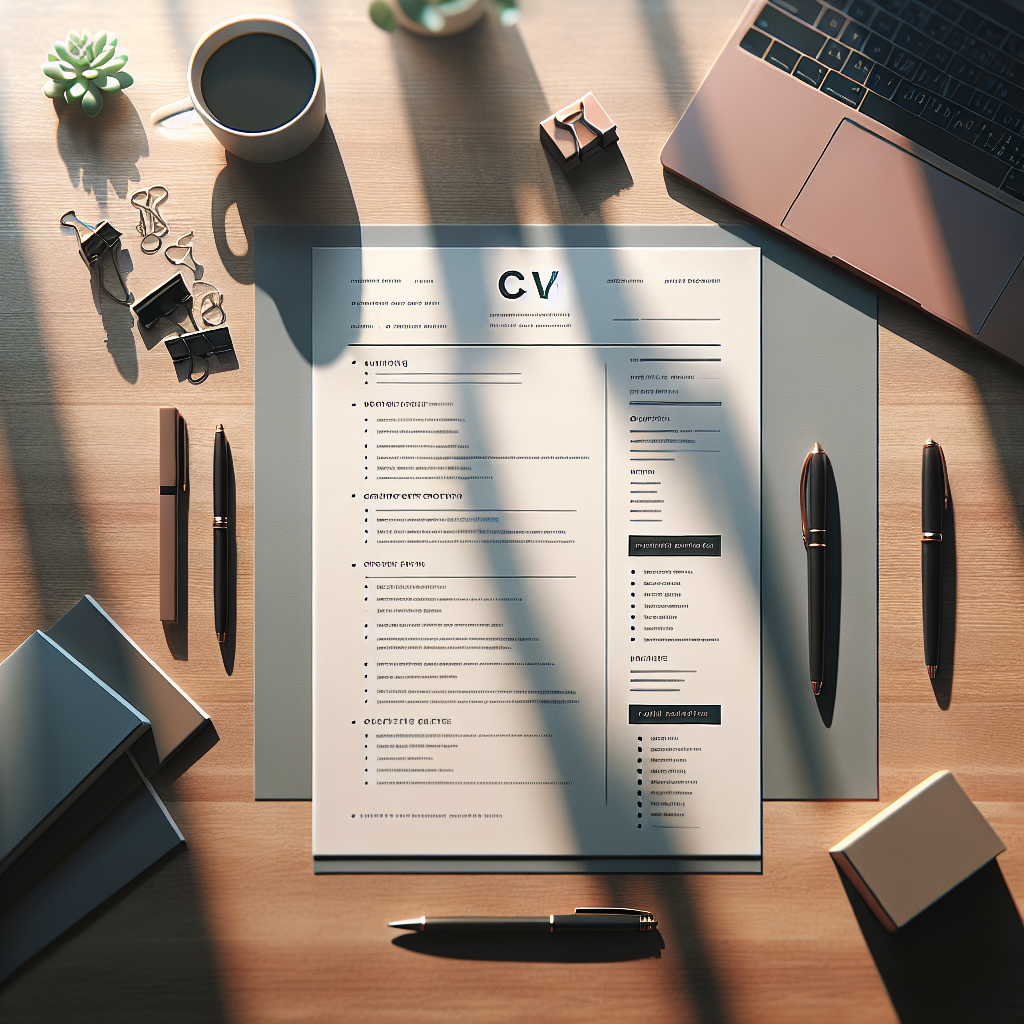
In the quest for job success, the importance of a well-formatted CV cannot be overstated. A carefully structured document not only enhances readability but also significantly influences the first impression you make on potential employers. In this post, we will explore the essential role of formatting in creating a professional CV, covering key elements to consider, common mistakes to avoid, and tips for adapting your formatting for different industries. Additionally, we’ll delve into the role of visual hierarchy in CV design and showcase real-life examples of effective formatting.
Understanding the Impact of Formatting
When it comes to job applications, formatting plays a pivotal role in how your CV is perceived. It can make the difference between capturing a recruiter’s interest and having your application overlooked. A well-formatted CV does more than present information; it creates a visual narrative that guides the reader through your professional journey.
The impact of formatting is multifaceted. Firstly, it enhances readability. A CV that is cluttered or poorly structured can confuse the reader, leading to important information being missed. By using clear headings, bullet points, and consistent font choices, you can create a document that is easy to scan quickly. Many recruiters spend mere seconds on an initial CV review, making clarity crucial.
Secondly, effective formatting communicates professionalism and attention to detail. A CV that adheres to standard formatting conventions—such as alignment, font sizes, and spacing—implies that the applicant is meticulous and understands the norms of the professional world. Conversely, a CV riddled with inconsistencies or unconventional layouts can raise red flags about the candidate’s suitability for the role.
Furthermore, the choice of formatting can subtly convey your personal brand. For instance, a creative industry professional may opt for a more visually striking layout, incorporating colours and graphics, while someone in finance may choose a more traditional and conservative format. Understanding the expectations of your target industry is essential in determining how to present your qualifications effectively.
Ultimately, the formatting of your CV should serve to enhance your content, not overshadow it. By prioritising a clean, professional layout, you can ensure that your skills and experiences take centre stage, allowing you to make a lasting impression in a competitive job market.
Key Formatting Elements to Consider
When creating a professional CV, formatting plays a crucial role in making a positive first impression on potential employers. A well-structured CV not only enhances readability but also helps highlight your qualifications effectively. Here are the essential formatting elements to consider when crafting your CV:
- Font Choice: Choose a clean, professional font such as Arial, Calibri, or Times New Roman. Ensure that the font size is legible; typically, 10-12 points is ideal for the body text, while headings can be slightly larger.
- Consistent Layout: Maintain a consistent layout throughout your CV. Use the same font style and size for similar sections to create a cohesive look. This helps in guiding the reader’s eye smoothly across the document.
- Clear Headings: Use clear headings and subheadings to demarcate different sections such as Education, Work Experience, and Skills. This allows employers to quickly locate the information they need.
- Bullet Points: Organise information using bullet points instead of paragraphs. This improves readability and allows you to present your achievements and responsibilities in a concise manner.
- White Space: Incorporate white space effectively to avoid overwhelming the reader. Margins of at least 1 inch and adequate spacing between sections can make your CV look clean and professional.
- Alignment: Ensure that all text is properly aligned. Typically, left alignment is preferred for body text, while headings can be centre-aligned. Consistent alignment contributes to a polished appearance.
- Visual Elements: While creativity should be used judiciously, consider incorporating subtle visual elements like lines or shading to separate sections. This can add a modern touch without sacrificing professionalism.
- PDF Format: Save and send your CV in PDF format to preserve formatting across different devices and software. This ensures that your document appears exactly as intended when viewed by employers.
Incorporating these formatting elements into your CV will not only enhance its aesthetic appeal but also improve its functionality. A well-formatted CV can significantly increase your chances of capturing the attention of hiring managers and securing that all-important interview.
Common Formatting Mistakes to Avoid
When crafting a professional CV, the importance of formatting cannot be overstated. A well-structured CV not only enhances readability but also creates a positive first impression on potential employers. However, many job seekers fall into common formatting traps that can detract from their overall presentation. Here are some key formatting mistakes to avoid:
- Inconsistent Font Usage: Using multiple fonts or varying font sizes throughout your CV can make it look disorganized. Stick to one or two fonts that are easy to read, and use bold or italics sparingly to emphasize key points.
- Poor Alignment: Aligning text inconsistently can create a chaotic appearance. Ensure that all headings, bullet points, and sections are uniformly aligned. This not only improves aesthetics but also aids in navigation.
- Overuse of Colour: While a splash of colour can add visual interest, overdoing it can be distracting. Use colour strategically to highlight important sections or headers, but keep the overall palette professional and subtle.
- Neglecting White Space: A cluttered CV can overwhelm readers. Ensure adequate white space between sections, making it easier for hiring managers to scan your qualifications quickly. This can be achieved by using margins effectively and spacing out sections appropriately.
- Too Many Sections: Adding unnecessary sections can dilute the impact of your CV. Focus on the most relevant information that showcases your skills and experiences. Aim for brevity and clarity, ensuring each section serves a purpose.
- Inadequate Use of Bullet Points: Long paragraphs can be daunting for recruiters. Using bullet points to break down information enhances readability. Each bullet should be concise, focusing on achievements or responsibilities.
- Ignoring the File Format: Submitting your CV in an incompatible file format can hinder the application process. Always save your document as a PDF unless otherwise specified, ensuring that the formatting remains intact when viewed by employers.
By paying attention to the formatting of your CV, you not only present your qualifications more effectively but also demonstrate professionalism and attention to detail—qualities that are highly valued in any job applicant.
Adapting Formatting for Different Industries
When it comes to crafting a compelling CV, one of the most overlooked aspects is the formatting. Formatting not only enhances readability but also reflects your professionalism and attention to detail. Different industries have varying expectations regarding CV layouts, and understanding these nuances can significantly impact your chances of landing an interview. Here’s how to adapt your CV formatting based on industry standards:
1. Creative Industries
In sectors like design, marketing, and media, creativity is key. Here, your CV should not only convey your skills but also showcase your creative flair. Consider using:
- Visual Elements: Incorporate colours, infographics, and unique fonts to create a visually engaging layout.
- Personal Branding: Use a logo or a distinctive header that aligns with your personal brand.
- Portfolio Links: Include links to your online portfolio or previous works in a dedicated section.
2. Corporate and Financial Sectors
For industries such as finance, law, and corporate management, a more traditional and structured format is preferred. Focus on:
- Clear Sections: Use distinct headings and bullet points for easy navigation through your qualifications.
- Professional Fonts: Stick to classic fonts like Arial or Times New Roman to maintain formality.
- Conservative Colour Scheme: Opt for a monochrome palette or subtle tones to reflect professionalism.
3. Technology and IT
In the tech industry, while innovation is appreciated, clarity remains paramount. Your CV should highlight:
- Technical Skills: Use tables to list programming languages, tools, and platforms clearly.
- Project Experience: Format your experience section to emphasize projects, showcasing your role, technologies used, and outcomes.
- Agile Format: Consider using a two-column layout to make your CV visually appealing while maintaining clarity.
4. Academia and Research
For those in academia or research-oriented roles, your CV should reflect a scholarly approach. Ensure to include:
- Publications and Presentations: Format these in a dedicated section, ensuring proper citation styles are used.
- Grants and Awards: Highlight these achievements prominently to establish credibility and expertise.
- Detailed Education Section: Include your educational background with thesis topics and relevant coursework.
Ultimately, tailoring your CV formatting for specific industries ensures that you present yourself in the best possible light, aligning your skills and experiences with what potential employers are seeking.
Utilising Online Tools for Effective Formatting
In today’s digital landscape, the importance of effective formatting in creating a professional CV cannot be overstated. An appealing and well-structured CV enhances readability and leaves a lasting impression on potential employers. Fortunately, various online tools are available to assist job seekers in achieving this goal.
Online CV generators, such as CVCV.me, offer intuitive platforms that simplify the formatting process. These tools provide users with a variety of templates tailored to different industries and job types, allowing individuals to choose a layout that best represents their personal brand. By using these templates, applicants can save time and ensure that their CV adheres to professional standards.
- Customisation: Many tools allow users to modify fonts, colours, and layouts to suit their preferences.
- Real-Time Updates: Changes can be made instantly, ensuring that the CV is always current.
- Accessibility: Create and edit your CV from anywhere, whether on a smartphone, tablet, or computer.
When utilising these tools, it is essential to pay attention to several formatting elements that contribute to a polished CV:
- Consistent Layout: Maintain uniformity in headings, bullet points, and spacing throughout the document.
- Font Choice: Select professional fonts that are easy to read, such as Arial, Calibri, or Times New Roman.
- Whitespace: Adequate spacing between sections enhances readability and prevents the CV from appearing cluttered.
- Visual Hierarchy: Use headings and subheadings to guide the reader through the document, emphasising key sections.
In addition to these formatting aspects, online tools often include features that allow users to incorporate multimedia elements, such as links to portfolios or social media profiles. This integration provides a comprehensive view of a candidate’s qualifications and enhances the overall appeal of the CV.
In summary, leveraging online tools for effective formatting not only streamlines the CV creation process but also significantly enhances the presentation of your professional qualifications. By taking advantage of these resources, job seekers can improve their chances of making a strong impression in a competitive job market.
The Role of Visual Hierarchy in CV Design
Creating a professional CV requires more than just a list of experiences and qualifications; it demands an understanding of visual hierarchy. Visual hierarchy refers to the arrangement of elements in a way that clearly indicates their importance. By strategically employing this concept, you can make your CV not only more attractive but also easier to navigate, ensuring that hiring managers quickly notice the most relevant information.
To effectively utilize visual hierarchy in your CV design, consider the following key elements:
- Fonts and Typography: Choose fonts that are both professional and legible. Use larger font sizes for headings and subheadings to differentiate sections. For instance, your name should be the most prominent text, followed by section titles like “Experience” and “Education.” This not only guides the reader’s eye but also emphasizes your key details.
- Spacing and Layout: Adequate white space is essential in maintaining clarity. Ensure that there is enough space between sections and around text blocks to prevent your CV from appearing cluttered. A well-structured layout helps to highlight your achievements without overwhelming the reader.
- Bullet Points: When listing your responsibilities and achievements, use bullet points to break down information into digestible pieces. This makes it easier for hiring managers to skim through your CV and identify relevant skills or experiences quickly.
- Color and Contrast: While it’s important to maintain a professional appearance, the strategic use of color can enhance your CV’s visual hierarchy. Use a subtle color palette to highlight section headers or key achievements without compromising readability. Ensure there’s sufficient contrast between the background and text for easy reading.
- Visual Elements: Incorporating icons or simple graphics can help differentiate sections and draw attention to important information. For example, using icons next to contact details or skills can create a modern, visually appealing look that stands out.
In conclusion, when designing your CV, always consider how the arrangement of text, white space, and visual elements can impact the overall effectiveness of your application. A well-structured CV with a strong visual hierarchy can help you present your qualifications in the best possible light, ultimately leading to more interview opportunities.
Real-Life Examples of Effective CV Formatting
When it comes to crafting a professional CV, formatting plays an essential role in making a positive first impression on potential employers. A well-structured CV not only enhances readability but also highlights key information in a visually appealing manner. Below, we explore several real-life examples that demonstrate effective CV formatting techniques.
John Doe, a graphic designer, opted for a clean and minimalist format that emphasizes his design skills. He used ample white space, a simple sans-serif font, and clear headings to organize sections such as Education, Experience, and Skills. This approach not only made his CV easy to read but also reflected his design ethos.
Jane Smith, a marketing professional, incorporated visual elements into her CV, including infographics to showcase her achievements. For instance, she used circular charts to illustrate her proficiency in various marketing tools. This not only caught the employer’s eye but also provided a quick reference to her skills.
Mark Johnson, an experienced project manager, utilized a chronological format that highlighted his career progression. By listing his roles in reverse order, he effectively showcased his growth and increasing responsibilities. This format allowed hiring managers to quickly assess his experience and suitability for senior roles.
These examples illustrate that effective CV formatting is not just about aesthetics; it’s about creating a narrative that captures the attention of potential employers. Here are some key takeaways from these examples:
- White Space is Crucial: Adequate spacing improves readability and allows important sections to stand out.
- Visual Elements Enhance Engagement: Incorporating graphics can make key information more digestible and memorable.
- Chronological Order Highlights Progression: Clearly showing career advancement can be beneficial for experienced professionals.
In conclusion, effective formatting is a powerful tool in CV creation. By adopting strategies that suit your personal brand and profession, you can significantly enhance your chances of capturing the attention of hiring managers.

Leave a Reply